Because automation doesn’t fix a process—it locks it in. When companies layer AI onto fifteen years of accumulated workarounds, manual handoffs, and redundant approvals, they don’t get transformation. They get the same dysfunction running faster.
Only 12% of firms begin their AI assessment by asking the question that matters most: does this process need to exist at all?
The other 88% skip straight to automation. They pave the cow path.
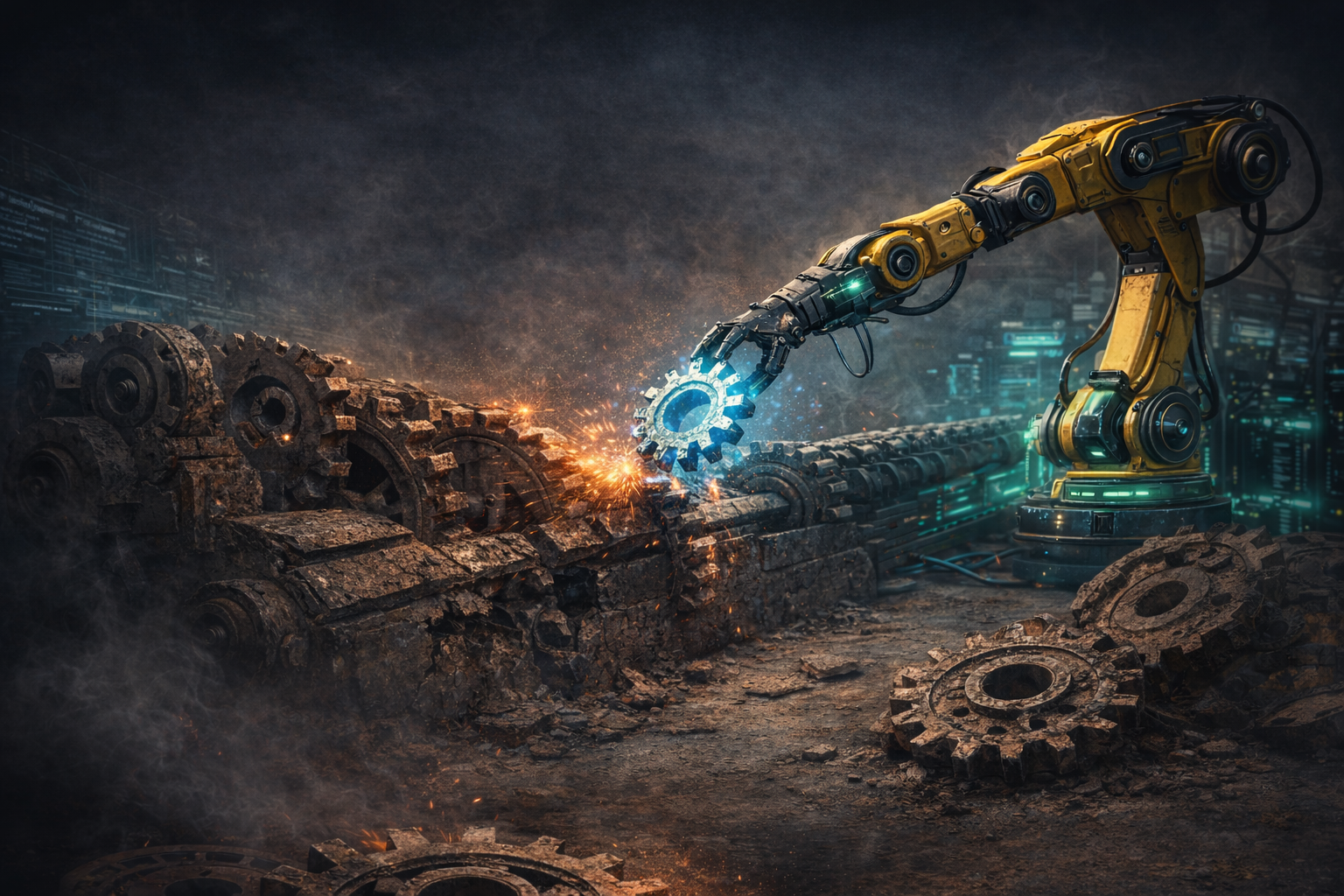
The Cow Path Problem
The instinct is understandable. You’ve got a process that chews up 200 hours a month. Your team complains about it constantly. Someone on the AI committee suggests automating it, and everyone nods because it sounds like progress.
But automating a broken process doesn’t fix it. It locks the dysfunction into your systems permanently. Now you’ve spent six months building AI around something that shouldn’t exist, and nobody wants to touch it because “the system works.” Except it doesn’t. It just fails faster.
The InvestOps 2026 survey of 200 global buy-side operations leaders tells this story in numbers. Only 17% of firms have achieved full straight-through processing. The other 83% are stuck in hybrid workflows—partially automated systems that handle routine cases beautifully and collapse the moment an exception appears. They didn’t start by asking whether the process should exist. They started by asking how to make it faster. And now they’re trapped.
The E-S-A Framework: Eliminate First
The framework that prevents this is disarmingly simple: Eliminate → Standardize → Automate. In that order. Always.
Eliminate means asking whether the process should exist at all. Not whether it can be improved—whether it should be here. Most organizations skip this step entirely because it requires someone to challenge institutional habits that have calcified into policy.
Standardize means reducing variation before you automate. If a process runs differently across three offices, automating it gives you three automated messes instead of one manual one. Standardize first, or don’t bother.
Automate comes last—and only for processes that survived the first two steps. By the time you reach this stage, you’re automating something that deserves to exist and runs the same way everywhere. That’s when AI delivers real returns.
Two Companies That Got It Right
JPMorgan’s lawyers were spending 360,000 hours a year interpreting commercial loan agreements. The obvious move was to use AI to help them read faster. Instead, JPMorgan asked a different question: can the AI interpret the agreements itself? The result was a system that could analyze a 12,000-word loan document in seconds. They didn’t automate the reading process. They eliminated it.
Novo Nordisk faced a similar choice with clinical trial regulatory submissions—documents that took teams ten weeks to compile manually. They didn’t build AI to help humans compile faster. They rebuilt the entire pipeline so AI could generate the submissions directly from structured data. Ten weeks became ten minutes. Not by speeding up the old process, but by destroying it and building something new.
The Two Questions That Matter
Before you spend another dollar on AI, ask two questions about every process on your automation roadmap:
First: If this process disappeared tomorrow, would anyone outside this department notice? If the answer is no, you don’t need to automate it. You need to kill it.
Second: If you were building this company from scratch today, would this process exist? If the answer is no, you’re maintaining an artifact of organizational history, not a business requirement.
The Permission Slip tool at flattenthej.com was built for exactly this conversation. It’s a structured framework for challenging any process to prove it deserves to exist before it earns the right to be automated.
The companies that win the AI transition won’t be the ones that automate the most. They’ll be the ones that eliminated the most before they automated anything.
∗ ∗ ∗
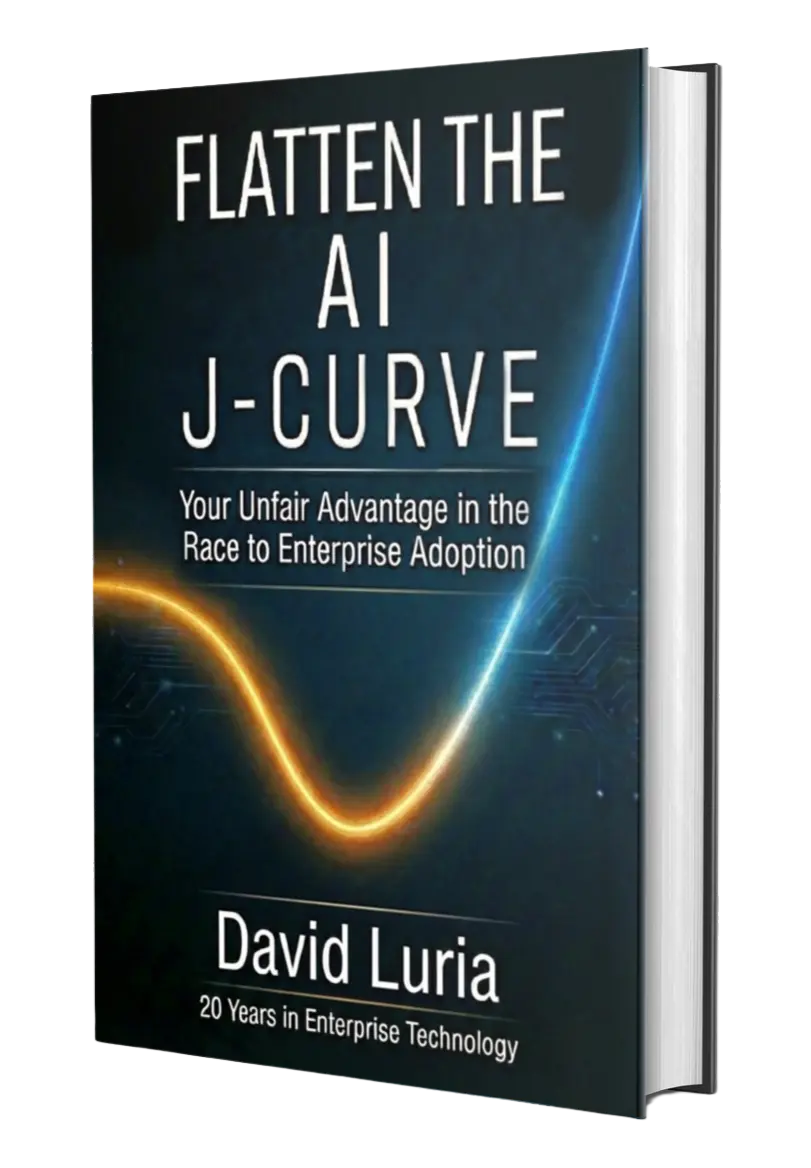
David Luria is the author of Flatten the AI J-Curve: Your Unfair Advantage in the Race to Enterprise Adoption (May 2026) and the founder of Corso & Alexander.
Read the full piece: Subscribe to The Signal on Substack
Free tools: flattenthej.com
Flatten the AI J-Curve — Available May 5, 2026